
Ten Years on Swiss Soil: What a Decade of Digital Curiosity Taught Me
This year I turned forty. I bought a house in the middle of Italy. I am packing my Swiss chapter into neatly labelled boxes and preparing for whatever the next decade decides to offer. Such transitions have a habit of awakening a reflective mood, and I find myself looking back over almost ten years in Switzerland: the people I met, the work that shaped me, and the strangely wonderful problems I spent my time obsessing over.
Switzerland was never meant to be a brief stop. It became a place of professional transformation, intellectual mischief, and more than a few experiments that spiralled into something much larger than I expected.
Learning to Measure What People Don’t Look At
When I first arrived at Nestlé’s global headquarters as a Global Insights Manager, I stepped into the lively crossroads where marketing meets data. What struck me early on was just how little time any of us actually spend looking at digital advertising.
It turns out the answer is hardly any time at all.
Working with MOAT, we uncovered a truth that felt almost comically on-brand for the digital age: roughly 80 per cent of social media ads are seen for less than a second. On top of that, around half of video placements never even play, and another large portion are scrolled past before the creative truly reveals itself.
In a world of fractional seconds, creative ambition collides with neurological reality. The human brain can recognise a brand in 0.6 seconds, faster than a blink, and yet these tiny pockets of attention must shoulder the burden of storytelling, persuasion, and memory.
So we built a new metric. Something capable of capturing what was actually happening rather than what we hoped was happening. Once we saw the truth clearly, we could design solutions that played by the rules of the medium rather than fighting against them. In markets where auto-play was low, the static thumbnail was no longer a trivial placeholder. It was the ad. Treating it as such created meaningful gains.
The best part was watching this work ripple out into the wider industry. Measurement systems shifted. Language changed. And the conversation around attention in digital marketing became just a little more honest.
Geo-Experimentation: Letting Real Life Become the Laboratory
A second obsession carried me through the years: how to measure incrementality at scale without turning marketing budgets into extravagant science projects.
Most large advertisers sit on enormous quantities of retail data store-level sales, regional patterns, weekly behaviours yet these datasets are rarely used for media measurement because the systems are too complex to stitch together easily.
But what happens when you simply vary advertising geographically and allow the existing data to do the talking?
You get natural experiments. Experiments that answer questions like:
- Would people have subscribed even without the paid search ad?
- Does this digital investment genuinely cause uplift or simply intercept intent that already exists?
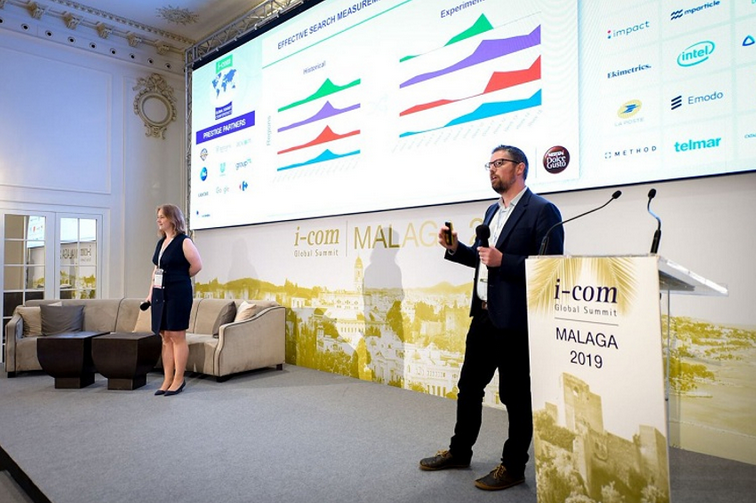
My first exploration of geo-experimentation was with Analytic Partners years ago and later presented with Kevin O’Farrel at I-Com. The idea persisted like a stone in my shoe; irritating, promising, impossible to ignore.
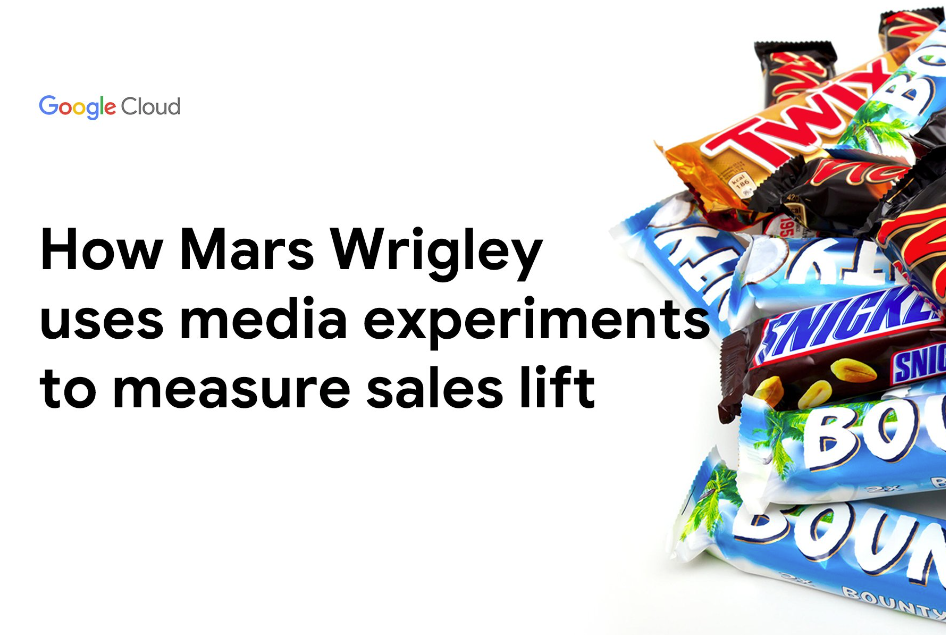
When I joined EPAM, the ingredients finally aligned: advanced modelling capabilities, powerful data engineering, ML operations, automation, and a partner in Mars Wrigley who shared the appetite for experimentation. Together, we shaped these ideas into Cortex, a framework to industrialise geo-experimentation and measure incrementality continuously rather than as a rare special project. Presenting that work at Google Next was a milestone, and there is more yet to come.

Marketing Effectiveness in the Age of AI
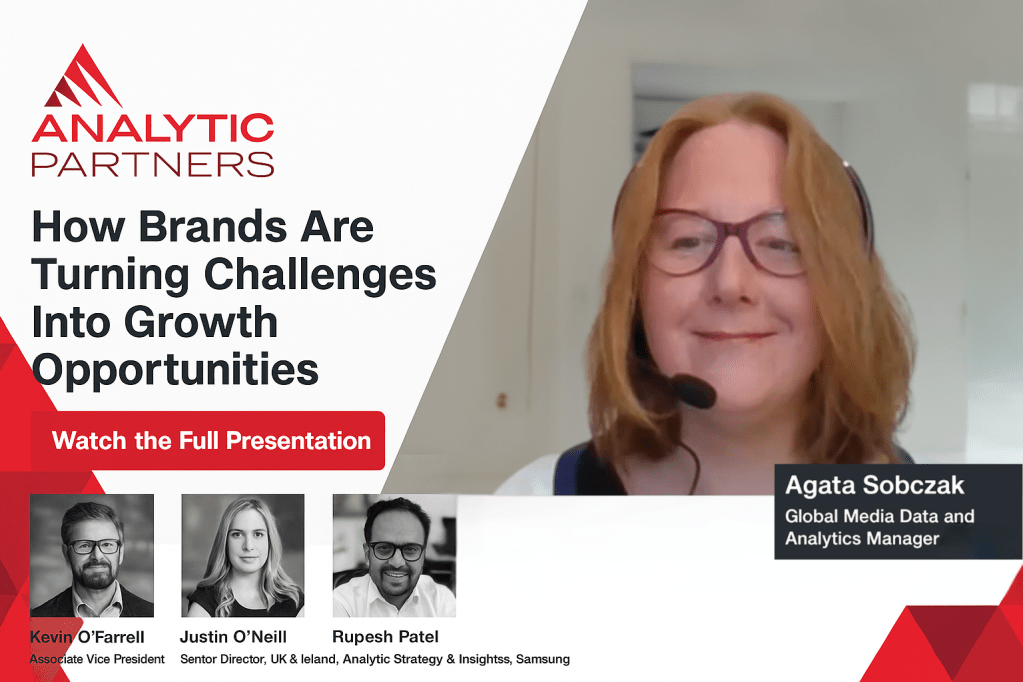
Before all of this, I learned the craft of marketing mix modelling at Analytic Partners, training I still regard as one of the most valuable foundations of my career. Understanding what truly grows a brand, across the 4Ps and across channels, is the underpinning of every meaningful investment decision.
Today the landscape has shifted again. With the rise of online retail, retail media, and endless ‘buy now’ journeys, the key question becomes: what is incremental? If a shopper arrives with purchase intent already burning brightly, how much credit does the last touchpoint deserve?
Across teams, clients, and partners, the consensus is clear: incrementality is the metric that matters. And the only reliable route to incrementality is experimentation. Not one-off tests, but an always-on, AI-supported, continuously learning measurement ecosystem.
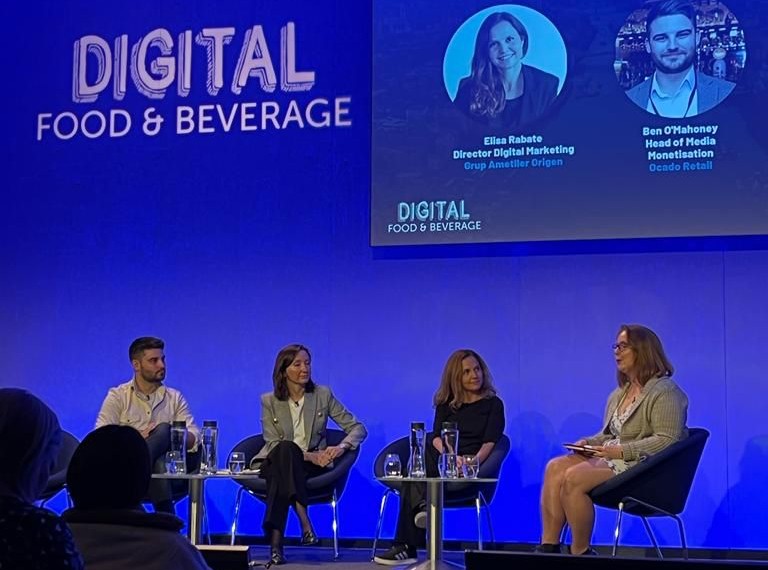
This is the frontier that excites me most. Not AI as a magician, but AI as an amplifier: scaling models, revealing patterns, reducing friction, and allowing human curiosity to roam more freely.
A Decade of Curiosity Well Spent
As I leave Switzerland, I take with me not only memories of mountains, lake-dotted train rides, and a cat who has very strong opinions about gardens, but also a profound gratitude for the people and teams who fed my curiosity rather than taming it.
My work over these ten years has circled a simple idea: measurement shapes behaviour. When we measure poorly, we spend poorly. When we measure well, brands grow. And when we combine human imagination with AI-powered rigour, the possibilities expand dramatically.
Switzerland gave me space to explore those questions properly. Italy, I suspect, will give me new questions entirely.
Onward to new experiments

